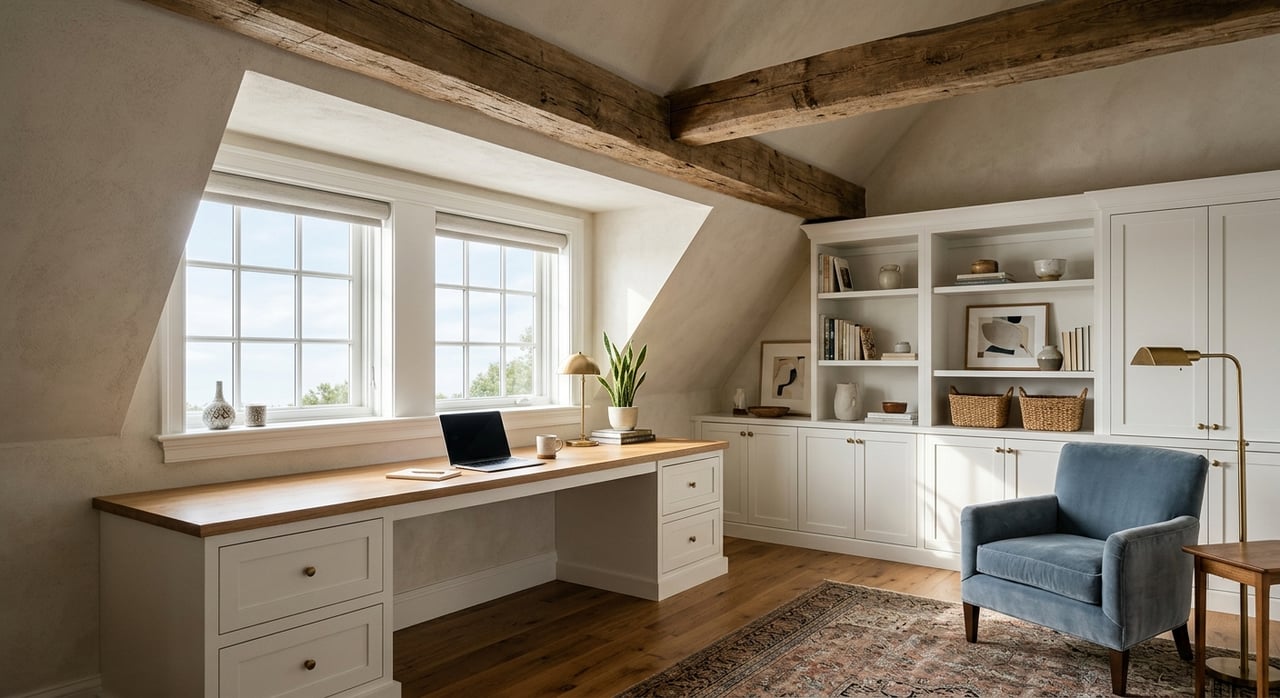
Remote Work in the Durham Triangle: City-by-City Guide
April 23, 2026
April 23, 2026
If you work remotely, where you live shapes more than your commute. It affects how easily you can switch between focused work, coffee meetings, evening walks, and the kind of neighborhood rhythm that makes daily life feel easy. If you are comparing Durham, Raleigh, and Chapel Hill, this guide will help you understand how each one supports a remote work lifestyle so you can choose the setting that fits you best. Let’s dive in.
Durham stands out for its compact feel, character-rich housing, and active downtown energy. Official city and visitor resources present Durham as a place where arts, neighborhoods, and live-work-play convenience come together in a relatively tight footprint. That can be especially appealing if you want your workday and your personal time to happen within a short distance of home.
Durham also has a distinct physical identity. According to Discover Durham’s downtown guide, downtown is a one-square-mile area with brick warehouses that have been converted into modern living spaces. That mix of adaptive reuse and older neighborhood fabric gives Durham a different feel than a city built around broader suburban expansion.
For many remote workers, Durham offers a strong balance between productivity and personality. You can picture a day that starts at home, shifts to a downtown coworking spot, includes a walk through a park or a lunch break nearby, and ends with evening plans without a long cross-city drive. That kind of rhythm is one of Durham’s biggest lifestyle advantages.
The city also emphasizes neighborhood identity. From bungalow-lined streets highlighted in areas like West End and East Durham to period homes in places like Hope Valley, Durham tends to appeal to buyers who value homes with individual style and streetscapes with a sense of history. If you prefer character over sameness, Durham often feels more tailored than uniform.
Durham’s housing story is closely tied to its history. Official and visitor materials point to older housing stock, historic streets, and reused industrial buildings that now serve as living spaces. For a remote worker, that can translate into homes with more architectural detail, distinct layouts, and a stronger sense of place.
That does not mean every home is historic or every neighborhood feels the same. It means Durham is often a strong fit if you want options that feel less standardized. If your ideal setup includes a dedicated office in a bungalow, a renovated loft near downtown, or a home in an established neighborhood with a unique identity, Durham may rise to the top of your list.
One of Durham’s clearest remote-work anchors is American Underground, located downtown near Main and Corcoran streets. It offers coworking, private offices, conference rooms, member events, a rooftop patio, and day passes. That kind of setup gives you flexibility if you do not want to work from home every day.
The benefit is not just the workspace itself. It is the surrounding environment. A downtown coworking hub can make it easier to build variety into your week, meet clients or colleagues, and step into a more social workday when you need it.
A good remote work lifestyle is not just about your desk. It is also about how easy it is to take a walk, clear your head, and enjoy your surroundings between meetings. Durham offers strong support here, with the city noting it has nearly 100 city-owned parks and recreation facilities.
Downtown also benefits from Durham Central Park, which Discover Durham describes as a five-acre municipal park with a playground, skate park, pavilion, art studios, public art, and lawn space used for markets and concerts. If you like the idea of lunch breaks outdoors or after-work activity close to home, Durham has a lot going for it.
Raleigh supports remote work in a different way. Official materials describe downtown as a place where business, government, and culture converge, with districts that include downtown Raleigh, Glenwood South, and Moore Square. In simple terms, Raleigh gives you a broader canvas.
For remote workers, that often means more choices spread across a larger area. You may find a wider mix of settings, from historic neighborhoods to newer and evolving districts. If you want more infrastructure and a bigger amenity network, Raleigh may feel like the most flexible option in the Triangle.
Raleigh stands out for the number and spread of flexible workspace options in this research set. The Loading Dock has multiple Triangle locations, including two in Raleigh, and offers coworking, dedicated desks, private offices, meeting rooms, and day passes. Regus coworking in Raleigh also provides flexible access options.
What makes Raleigh especially practical is how many systems support a mixed workweek. The city highlights downtown features such as free two-hour parking, bike share, BRT, and a social district. If your remote schedule includes regular in-person meetings, networking, or movement across different parts of the city, Raleigh may be the easiest place to manage those logistics.
Raleigh also brings scale to outdoor life. The city says it has more than 200 parks, more than 100 miles of paved greenway, 72 public playgrounds, nine pools, and more than 112 courts. That reach can matter if outdoor access is part of how you structure your day.
Downtown Raleigh adds activity through spaces like Moore Square and City Plaza, along with first-Friday events. If you want a city where work, recreation, and events are spread across a large and active network, Raleigh has a strong case.
Chapel Hill tends to attract buyers who want a smaller-scale pattern with easy access to daily conveniences. Official materials frame it as a place with historic charm, modern conveniences, abundant green space, and fare-free public transportation. That creates a different remote work feel than either Durham or Raleigh.
In Chapel Hill, the lifestyle often feels more centered on village-style living and central nodes. Its neighborhood descriptions emphasize areas like downtown Chapel Hill, East 54, Meadowmont, and Southern Village, each with an orientation toward convenience, mixed-use access, or planned community design. If you value a more compact, organized daily routine, Chapel Hill may be especially appealing.
Chapel Hill’s coworking options are present, though more concentrated around central areas such as Franklin Street and Southern Village. Regus in Chapel Hill highlights coworking and serviced office options there, and Spaces Chapel Hill also advertises flexible workspace.
Mobility is a major part of the appeal. Chapel Hill Transit has been fare-free for more than 20 years, operating 21 routes and carrying more than 7 million rides per year according to the research provided. If you want a more car-light routine, Chapel Hill offers a compelling setup.
Outdoor access in Chapel Hill feels more trail- and transit-oriented than system-wide and expansive. The town maintains approximately 17.6 miles of urban greenways and trails. That supports the kind of midday walk or evening reset that many remote workers value.
The town’s visitor materials also describe downtown as a social hub, while Carrboro is presented as an arts-forward district. Together, those elements point to a lifestyle that is compact, connected, and centered around everyday convenience rather than large-scale city sprawl.
If you want the shortest possible summary, here is the most practical way to think about it:
That shorthand will not replace seeing these places in person, but it can help you narrow your search.
Durham may be your best fit if you want your day to feel connected and local. It works well for buyers who value historic character, downtown energy, coworking access, and parks or events within a shorter radius. If your ideal routine includes flexibility, walkable pockets, and homes with personality, Durham often delivers that combination.
It can also be a smart choice if you want a setting that feels urban without feeling oversized. Compared with Raleigh, Durham may feel more compact. Compared with Chapel Hill, it may feel less campus-centered and more shaped by independent neighborhood identity.
The best choice depends on what you want your week to look like. If you want more scale, more systems, and a wider amenity net, Raleigh deserves a close look. If you want a smaller-town rhythm with planned neighborhoods, transit support, and convenient daily patterns, Chapel Hill may feel right.
But if you want a city where home, work, food, parks, and culture often connect in a more immediate way, Durham stands out. For many buyers, that blend of character and convenience is what makes Durham so compelling.
If you are weighing Durham against Raleigh or Chapel Hill, a local advisor can help you compare not just price points, but daily lifestyle, housing patterns, and the kind of environment that supports the way you actually live and work. For tailored guidance across the Triangle, connect with Mollie Owen to schedule a private consultation.
Stay up to date on the latest real estate trends.



Work with us for unparalleled Raleigh luxury real estate service. Our deep local insight, refined marketing, and 25+ years of experience mean high-value transactions handled with care and precision—reach out to see what we can achieve for you.
CONTACT US
3200 Wake Forest Rd, Suite 101 Raleigh, NC 27609