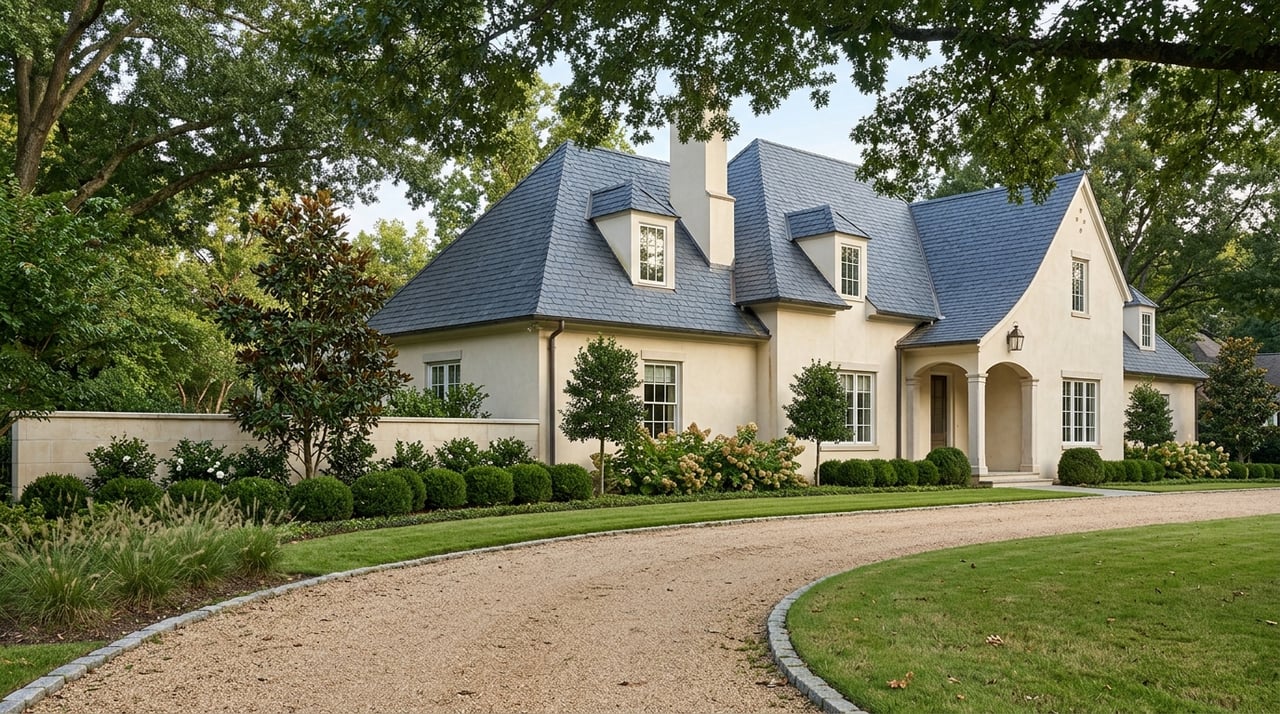
Explore Chapel Hill Estate Homes With Space and Privacy
May 28, 2026
May 28, 2026
If you want room to breathe in Chapel Hill, you may find that true estate-style living is less about being far from town and more about finding privacy within it. That can make the search feel surprisingly nuanced, especially in a mature market where many of the most appealing wooded settings are already established and tightly held. In this guide, you’ll learn where to start, what defines estate-style appeal in Chapel Hill, and what to verify before you fall in love with a property. Let’s dive in.
In Chapel Hill, estate-style living is a limited and character-rich segment of the market. The town is substantially built out, and local planning materials show a strong emphasis on low-density wooded lots, tree preservation, and the protection of site features that shape a property’s setting.
That means the estate feel often comes from the land as much as the house itself. Mature tree canopy, topography, deep setbacks, curved drives, stone walls, terraces, paths, and gardens can all play a major role in how a property lives and feels.
For many buyers, the premium is not simply more acreage. In Chapel Hill, it is often close-in privacy, especially near major anchors like UNC and UNC Health, with quick access to daily life while still feeling tucked away.
Chapel Hill is not a market where large tracts are everywhere. Instead, many of the most desirable estate-style settings are found in older, wooded neighborhoods where lot size, topography, and established landscaping create separation naturally.
This is an important distinction if you are relocating from an area where estate homes usually mean newer construction on expansive suburban parcels. In Chapel Hill, privacy may come from a half-acre lot with mature hardwoods and thoughtful siting just as much as from several acres farther out.
The town also treats many site elements as significant, including vegetation, rock retaining walls, open spaces, water features, paths, and tree allées. That reinforces the idea that an estate property here is often defined by its setting, landscape, and sense of retreat.
If your priority is access to UNC, UNC Health, and central Chapel Hill, several established neighborhoods stand out as starting points.
Gimghoul is one of the closest-in options for buyers who want a historic setting near campus. Town documentation describes it as a mostly Colonial Revival neighborhood with Craftsman and Tudor Revival examples, quiet streetscapes, a picturesque natural setting, and average lot sizes of about one-half acre.
If you want a home that feels private without giving up proximity, Gimghoul is a strong place to start. It offers a blend of architectural character and wooded surroundings that is hard to replicate in newer neighborhoods.
Rocky Ridge Farm is one of the clearest examples of large-lot character in Chapel Hill’s historic core. Official district materials describe a heavily wooded neighborhood with tall hardwoods and pines, parcels ranging from about one-half acre to 3.35 acres, curvilinear stone walls, quality landscaping, and substantial Colonial Revival and Tudor Revival houses.
For buyers drawn to classic estate details, this area captures many of the elements people imagine when they think of legacy Chapel Hill homes. The terrain, mature landscape, and substantial architecture create a strong sense of privacy and permanence.
Westwood is another useful search area southwest of campus. Town historic materials describe it as having large, hilly, wooded lots and substantial Colonial Revival houses.
If topography matters to you, Westwood is worth a close look. Hilly lots can create visual separation, long views, and a more tucked-away feel, even when you remain close to town amenities.
If your top priority is amenity-rich privacy, Governors Club is the clearest community to screen in. Community materials describe it as a 1,600-acre private golf community with estate lots ranging from 0.5 to 2 acres, Highland Pond lots from 2.5 to 4 acres, and many homes with golf-course or lake views from higher elevations.
Governors Club also offers a different lifestyle equation than the in-town historic neighborhoods. It combines larger parcels, controlled access, and a range of neighborhood styles, along with support for custom construction through a program that includes architects, builders, and landscape architects.
The community states that it is about 10 minutes from UNC-Chapel Hill and UNC Hospital. For buyers who want a stronger sense of separation without losing access to Chapel Hill’s main anchors, that balance can be especially appealing.
Lake Forest is another meaningful search point for buyers who want mature surroundings and a lake-centered setting. The neighborhood is centered on Eastwood Lake and a member-owned park, with the association maintaining the lake, shoreline, and park.
For some buyers, estate-style appeal is less about formal gates or a historic district and more about established character, natural features, and a sense of place. Lake Forest fits well into that conversation, especially if lake adjacency and older neighborhood character matter to you.
Chapel Hill’s estate-style homes often reflect the town’s older architectural fabric. In the UNC-adjacent large-lot neighborhoods, Colonial Revival is the most consistent style, with Craftsman, Tudor Revival, and English or Cotswold influences also appearing in historic areas.
That gives many properties a more rooted, timeless look than you might find in newer luxury communities. Instead of one dominant formula, the appeal often comes from how architecture and site work together.
Governors Club broadens the range further with more than 10 distinct neighborhood styles and custom-home architecture. If you want privacy but prefer a wider stylistic mix, that can expand your options.
When you tour estate-style property in Chapel Hill, it helps to evaluate more than the home itself. In this market, some of the most important features are outside.
Look closely at:
A property can have impressive square footage and still feel exposed. Another may have a smaller lot but feel far more private because of terrain, mature landscaping, and smart placement on the site.
One of the biggest practical points in Chapel Hill is that some estate-feel neighborhoods sit within local historic districts or neighborhood conservation districts. Chapel Hill has three local historic districts, five National Register historic districts, and ten neighborhood conservation districts.
That does not mean you should avoid these areas. It does mean you should understand early that exterior changes may be subject to review.
The town states that owners in local historic districts need a Certificate of Appropriateness for exterior changes. Chapel Hill’s preservation guidance also notes that significant site features can include rock retaining walls, walks, paths, open spaces, water features, and tree allées.
If you are imagining a future addition, detached garage, major hardscape work, or a substantial landscape redesign, this step matters. The property may offer exceptional beauty and privacy, but it may also come with a more structured approval process for changes.
A clear way to begin your Chapel Hill estate search is to decide which of these priorities matters most.
If you want close-in prestige, established character, and access to UNC and central Chapel Hill, begin with:
These areas are especially compelling if you value history, mature canopy, and a property that feels tucked into the fabric of Chapel Hill.
If you want gated privacy, larger homesites, and club-oriented amenities, start with:
This is often the cleanest option if you want estate scale in a more controlled community environment.
If you want an established neighborhood with natural features and a softer, lake-oriented setting, consider:
This path can work well if your ideal property feels relaxed, established, and connected to landscape rather than highly formal.
In a terrain-dependent market like Chapel Hill, due diligence is essential. Before making assumptions about what you can build, expand, or change, the town recommends checking the recorded plat and survey.
You should also confirm whether the property falls within an overlay district on the Town of Chapel Hill map. That step can help you understand any review requirements or site constraints before you move too far into the process.
Another practical point involves stream buffers and buildable area. Chapel Hill’s Resource Conservation District guidance notes that new lots must leave buildable area outside stream buffers, which makes site verification especially important when a property’s value is tied to land usability.
Estate-style purchases tend to involve more moving parts than a standard home search. Privacy, landscaping, access, long-term usability, and review constraints can all affect value and fit.
That is why local neighborhood knowledge matters so much in Chapel Hill. Two homes with similar price points may offer very different experiences depending on their setting, district status, terrain, and relationship to town.
The strongest results usually come from narrowing the search early around your real priority. When you know whether you want campus-adjacent privacy, gated acreage, or mature wooded character, the path becomes much clearer.
If you are exploring Chapel Hill estate-style living, a thoughtful strategy can save time and sharpen your search. For tailored guidance on neighborhoods, property positioning, and discreet representation, connect with Mollie Owen.
Stay up to date on the latest real estate trends.



Work with us for unparalleled Raleigh luxury real estate service. Our deep local insight, refined marketing, and 25+ years of experience mean high-value transactions handled with care and precision—reach out to see what we can achieve for you.
CONTACT US
3200 Wake Forest Rd, Suite 101 Raleigh, NC 27609