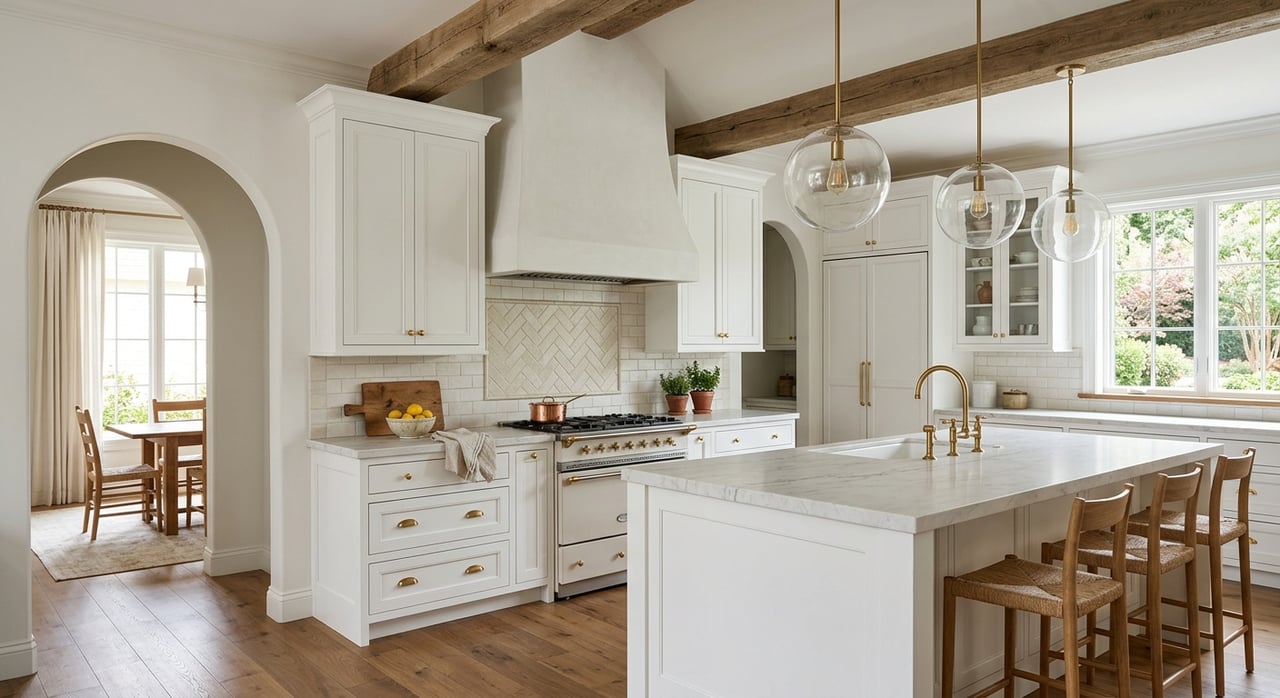
Chapel Hill Luxury Resale Value Through a Buyer's Lens
July 9, 2026
July 9, 2026
When you buy luxury in Chapel Hill, you are not just buying square footage. You are buying into a location, a lifestyle, and a future buyer pool that will someday evaluate the same property through their own lens. If resale value matters to you now, it helps to know what tends to hold appeal in this market and what can quietly limit it later. Let’s dive in.
In Chapel Hill, long-term value is shaped by more than architecture or finishes. The town sits in Orange County on the western edge of the Research Triangle and is closely tied to UNC-Chapel Hill, which gives the area a strong institutional anchor and steady visibility.
The town also describes itself through education, culture, parks, green spaces, local businesses, and dining. Orange County reports that 53.7% of residents are college graduates, the highest share in North Carolina, which helps explain why Chapel Hill supports a broad and educated buyer base for luxury homes.
For you as a buyer, that matters because future resale often depends on whether the address still feels compelling even after design trends change. A beautiful home in a durable location usually holds attention longer than a highly finished home in a less flexible setting.
Resale-minded buyers in Chapel Hill often ask a simple question: if the interiors looked dated in ten years, would the property still be desirable? That mindset shifts attention to the lot, the setting, the convenience, and the home’s ability to adapt over time.
In practical terms, strong resale value often comes from a combination of everyday livability and future usability. The best candidates tend to appeal not just to today’s buyer, but also to a future owner who wants comfort, privacy, and a location that makes daily life easier.
Chapel Hill benefits from a deeper luxury buyer corridor than a niche one-off market. Realtor.com’s April 2026 luxury report found 303 active million-dollar listings in the Durham-Chapel Hill metro, with year-over-year growth of 23.7% in million-dollar listings and a top-10% entry point of $1,239,750.
That does not mean every luxury home is equally protected. It does mean buyers have options, so properties with lasting strengths often stand out more clearly over time.
In Chapel Hill, lot characteristics can influence resale as much as the house itself. The town treats tree canopy as a protected resource in development decisions and notes that trees support livability by improving air and water quality, reducing runoff, slowing traffic, and providing shade.
That gives mature trees a value story beyond appearance alone. A lot with privacy, shade, and usable outdoor space can feel more complete to future buyers, especially when those features do not come with major regulatory complications.
A luxury lot should do more than look attractive on paper. Buyers often benefit from asking whether the outdoor space is actually usable, whether drainage appears manageable, and whether the site allows reasonable flexibility for future improvements.
The town’s Resource Conservation District overlay can limit or eliminate structures in streamside buffer areas. Because of that, two similarly priced properties may have very different long-term appeal if one has more practical buildable area and fewer constraints.
Privacy is a major draw in luxury real estate, but it should not come at the cost of future usability. A heavily constrained parcel may feel special today, yet a future buyer could view it more cautiously if additions, pool plans, outdoor structures, or site changes become difficult.
In Chapel Hill, the strongest lots often balance seclusion with optionality. That balance can widen your eventual resale audience.
Chapel Hill’s land-use framework deserves close attention if resale is part of your buying strategy. The town has historic districts and neighborhood conservation districts with design standards beyond ordinary zoning, and exterior changes in historic districts require a Certificate of Appropriateness.
Residential exterior work is also reviewed for compliance with setback, height, impervious-surface, and land-disturbance rules. For you, the takeaway is simple: a home that can be updated cleanly may be a safer long-term bet than one that depends on a very specific vision that is harder to maintain or modify.
Before you buy, it is wise to think beyond the current finish level. If you ever want to renovate a kitchen, expand outdoor living, add a guest suite, or rework the site plan, local rules can affect cost, timing, and feasibility.
That does not make regulated properties bad purchases. It simply means resale value may be stronger when a future owner can improve the property without fighting the entitlement path.
Chapel Hill’s Housing Choices amendments allow accessory apartments and certain cottages on qualifying lots. That flexibility still depends on standards tied to lot size, height, impervious surface, parking, and occupancy limits.
For some buyers, that kind of flexibility can improve long-term usefulness. A property that offers more than one way to live well over time may also attract more interest at resale.
Luxury in Chapel Hill is not only about privacy and architecture. It is also about how easily a home connects you to the parts of town that make daily life enjoyable.
Downtown Chapel Hill remains one of the area’s major lifestyle anchors, with shops, dining, events, live music, public art, and cultural programming. Buyers often place a premium on homes that offer a sense of retreat without feeling disconnected from those amenities.
The Downtown Chapel Hill Partnership notes that Chapel Hill Transit is fare-free and serves Chapel Hill, Carrboro, and the UNC community. Route 420 connects downtown Chapel Hill, UNC Hospitals, and the Durham Tech Orange County campus.
For regional travel, Raleigh-Durham International Airport serves Chapel Hill, and taxi or shuttle rides typically take 20 to 30 minutes. That kind of access can help support resale because future buyers often value homes that work well for both local routines and broader travel needs.
Chapel Hill says its Parks and Recreation Department operates and maintains more than 730 acres of public spaces. The town also highlights parks, trails, gathering spaces, and a greenway system intended to help residents reach work, school, shops, and restaurants without a car.
That network adds everyday appeal to many areas of town. Even at the luxury level, buyers tend to notice when a home offers easier access to outdoor space and connected recreation.
For many buyers, school assignment affects resale thinking, but in Chapel Hill it should always be checked by the specific property. Chapel Hill-Carrboro City Schools states that students are assigned to the school zoned for the home address using a School Assignment Map.
That district serves more than 11,000 students across four high schools, four middle schools, and eleven elementary schools. Orange County also notes that the county has two public school systems, Chapel Hill-Carrboro City Schools and Orange County Schools, so you should not assume assignment based on a neighborhood name or mailing address alone.
While every luxury purchase is unique, the properties with the strongest resale story often share a few traits:
These are not flashy features. They are the durable qualities that often matter most when the market becomes more selective.
One of the smartest ways to protect value is to evaluate a home twice. First, ask whether you love it today. Then ask whether someone else is likely to love it later for reasons that go beyond your personal taste.
That second test can be surprisingly clarifying. It helps you separate emotional appeal from durable market appeal, which is especially important in a luxury segment where buyers are careful and choices can be more nuanced.
If resale is part of your decision-making, these are useful questions to keep in mind as you tour properties:
In Chapel Hill, the best long-term purchases are often the ones that combine a durable location, flexible usability, and a home that can evolve gracefully over time.
If you want help evaluating Chapel Hill luxury homes through both a lifestyle and resale lens, Mollie Owen offers senior-level guidance, deep local perspective, and discreet buyer representation tailored to the Triangle’s premium market.
Stay up to date on the latest real estate trends.


Work with us for unparalleled Raleigh luxury real estate service. Our deep local insight, refined marketing, and 25+ years of experience mean high-value transactions handled with care and precision—reach out to see what we can achieve for you.
CONTACT US
3200 Wake Forest Rd, Suite 101 Raleigh, NC 27609