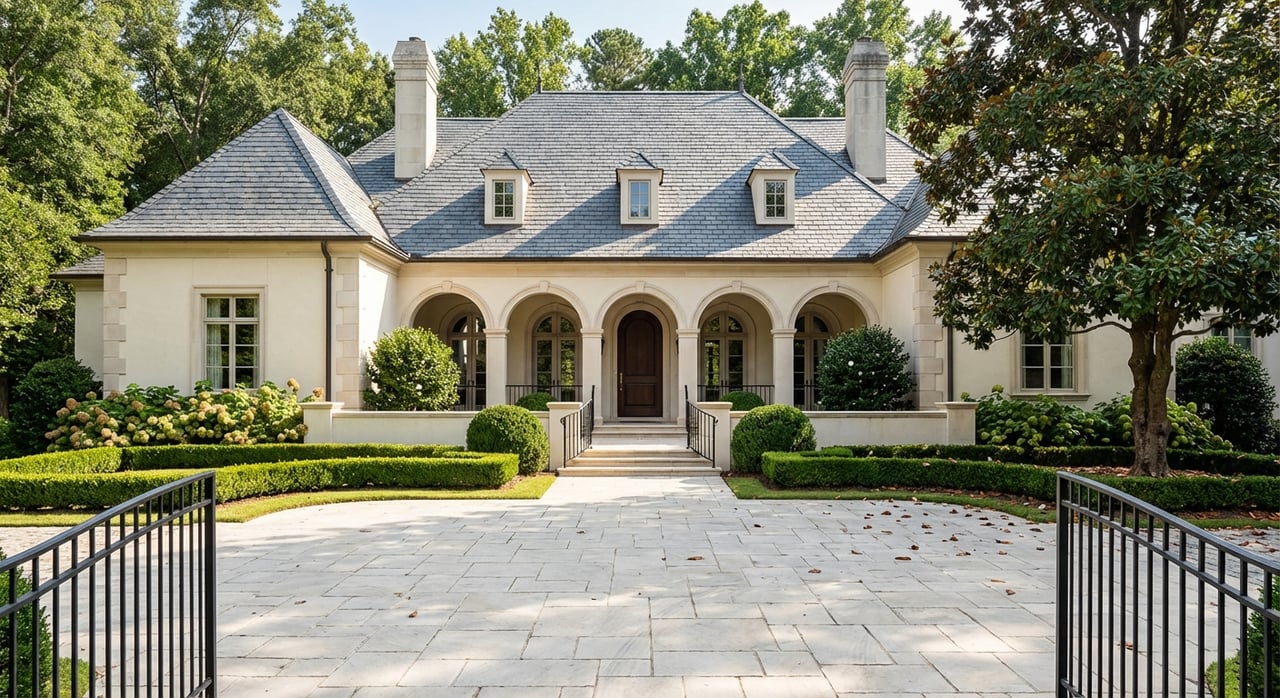
Best Luxury Homes & Neighborhoods Near Duke University
February 19, 2026
February 19, 2026
Moving to Durham for a new role at Duke and want a luxury home without a long commute? You have excellent options within minutes of campus, from walkable historic streets to private country-club communities. Each neighborhood offers a different mix of lifestyle, architecture, price point, and drive time. In this guide, you’ll get a clear look at the top neighborhoods near Duke, realistic price ranges, typical commutes, and how to match a community to your day-to-day needs. Let’s dive in.
Durham’s citywide median home value sits well below luxury territory. Zillow’s ZHVI shows a citywide median around $390,000 as of January 2026, while the neighborhoods below often trade at significantly higher price points. That gap is why buyers relocating for Duke often focus on a handful of in-demand districts known for historic character, larger lots, or private-club amenities.
Price data varies by source and timing. Aggregators use different methods, so medians from Realtor.com, Redfin, and Zillow may not match at any given moment. Use the ranges below as a helpful snapshot based on early 2026 market pages and local writeups, and confirm current values with recent comps.
If you want the shortest on-call commute and a classic, tree-lined setting, Trinity Park is a standout. It borders Duke’s East Campus and the Ninth Street corridor, so many homes are a 5 to 15 minute walk or a quick bike ride to campus. Typical drive times run about 2 to 8 minutes depending on your exact route.
You’ll find historic Victorians, Craftsman, and early 20th-century homes, plus select high-end infill. Price snapshot: market snapshots in early 2026 often show medians in the high $600,000s to $750,000 range (Realtor.com), with fully renovated or larger homes reaching $900,000 to $1 million and above. The trade-off is older systems and smaller lots than suburban estates, which is common in historic districts.
Just west of Ninth Street, Watts Hospital–Hillandale attracts buyers seeking a short 5 to 10 minute drive to Duke Medical Center and a strong neighborhood feel. Mature trees and a traditional street grid create a classic in-town ambiance.
Homes range from mid-century bungalows and Craftsman to renovated ranches. Price snapshot: recent market pages often place medians around $500,000 to $575,000. Expect fewer estate-scale properties than in country-club communities, but a great balance of character and proximity.
These in-town pockets offer lively, convenient living close to Ninth Street and downtown. Many clinicians and faculty appreciate the urban amenities and easy campus access, with typical drives of 5 to 12 minutes and some bikeable stretches.
Housing leans toward renovated bungalows, Craftsman, early suburban homes, and some infill. Price snapshot: Old West Durham commonly ranges from about $450,000 to $800,000 depending on condition and exact location. You trade lot size and privacy for walkability and a quick door-to-door to Duke.
Morehead Hill sits near downtown and close to Duke, offering a blend of historic homes and newer luxury townhomes geared to buyers who want in-town living with less yard maintenance. Typical commutes run 5 to 12 minutes and are often bikeable.
You’ll see a wide mix of architecture and home types. Price snapshot: some newer townhome and condo-style units list above $1 million, while single-family prices vary based on lot and renovations. It’s a strong choice if you value convenience and lock-and-leave living.
Croasdaile delivers a park-like, planned community feel with quick access to Duke and RTP. Many professionals choose it for its larger lots, trails, and proximity to club and pool amenities. Typical drives to Duke are often reported around 8 minutes from central Croasdaile, about 10 to 12 minutes to downtown, and roughly 15 minutes to RTP.
Housing spans luxury townhomes and custom single-family homes. Price snapshot: townhomes often run from the mid-$300,000s to above $800,000, while detached homes commonly range from the high $600,000s up through $1 million and beyond, especially for newer construction and estate lots. You gain privacy and space with a modestly longer commute than the most central neighborhoods.
Hope Valley is Durham’s historic private-club enclave, anchored by a Donald Ross–era course and a gracious streetscape of large lots and mature trees. If club life is a priority, review membership details directly with Hope Valley Country Club. Commutes to Duke typically run 10 to 20 minutes depending on traffic and address, and the neighborhood sits under about five miles from downtown Durham.
Architecture includes stately Colonials and Tudors, mid-century ranches, and luxury rebuilds. Price snapshot: renovated and estate-level homes commonly trade from about $700,000 to $1.5 million and higher, while some smaller mid-century properties may fall below that range. Expect separate club dues and membership requirements.
If you want resort-style amenities, a Tom Fazio–designed course, and large estate lots, Treyburn offers a private, suburban-luxury experience on Durham’s northern edge. The commute to Duke is longer, typically 20 to 30 minutes or more depending on location and peak traffic, but many buyers value the acreage and quiet setting.
Homes include large brick estates and high-end custom builds on sizeable lots. Price snapshot: listings have ranged from the mid-to-high $300,000s up through $1 million-plus, with examples exceeding $1.2 million appearing in recent years. The trade-off is a longer daily drive for more space and a country-club atmosphere.
If you are on call or keep irregular hours, a short, predictable commute can be a game-changer. Trinity Park, Watts Hospital–Hillandale, Old West Durham, and parts of Morehead Hill keep door-to-door times in the 2 to 12 minute range for many addresses. Confirm exact times with your preferred mapping app during the hours you expect to travel.
Duke provides on-campus garages and shuttles. Review current hospital parking locations and policies on the Duke Health parking and transit details page, and check with your department for employee parking assignments. For public transportation, GoDurham and GoTriangle serve stops near the hospital. You can see routes and timing for the Erwin Road at Fulton Street stop using this Moovit stop reference near Duke Hospital.
Common driving arteries include NC‑147, I‑85, and I‑40. Travel times stretch during peak periods, so plan test drives at both rush hour and late evening if you will be on call.
If you are preparing a relocation tied to Duke University or Duke Health, you deserve clear, senior-level guidance and a plan that fits your schedule and lifestyle. For discreet, white-glove buyer representation, curated neighborhood tours, and data-backed pricing insight across Durham’s luxury enclaves, connect with Mollie Owen. Schedule a Private Consultation.
Stay up to date on the latest real estate trends.


Work with us for unparalleled Raleigh luxury real estate service. Our deep local insight, refined marketing, and 25+ years of experience mean high-value transactions handled with care and precision—reach out to see what we can achieve for you.
CONTACT US
3200 Wake Forest Rd, Suite 101 Raleigh, NC 27609